Heritage
Château du Cayla: the house where Eugénie wrote for Maurice
At Andillac, between Gaillac and Cordes, a manor house keeps the two bedrooms where a brother and sister wrote. He died at twenty-eight; she kept her journal going for two more years, for him. The museum closes on 29 November until March.
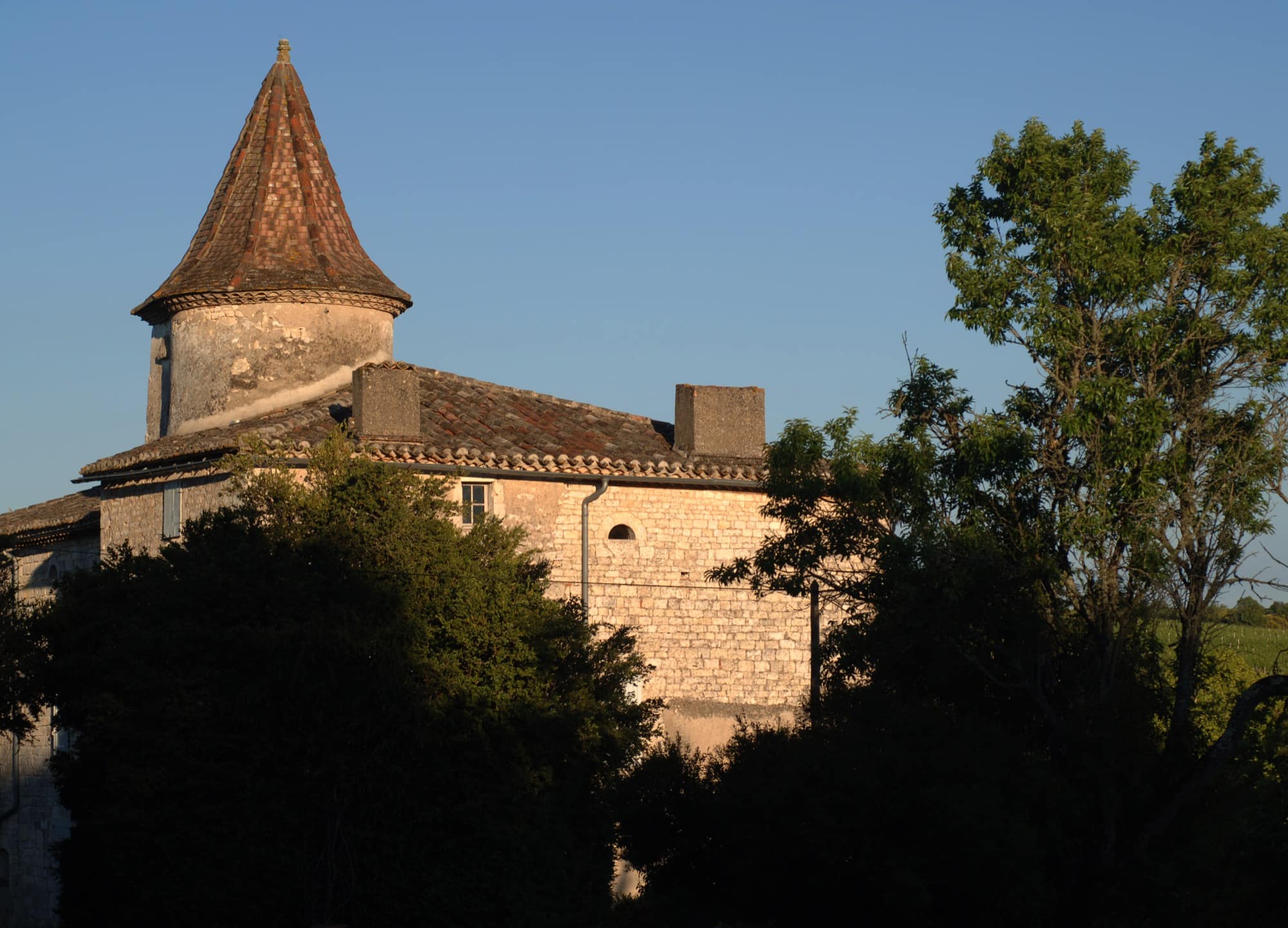
We visit châteaux for their architecture and museums for their collections. Le Cayla is worth neither reason. You go because two people wrote there, in two adjoining bedrooms, and both bedrooms are still there.
Two writers, one house
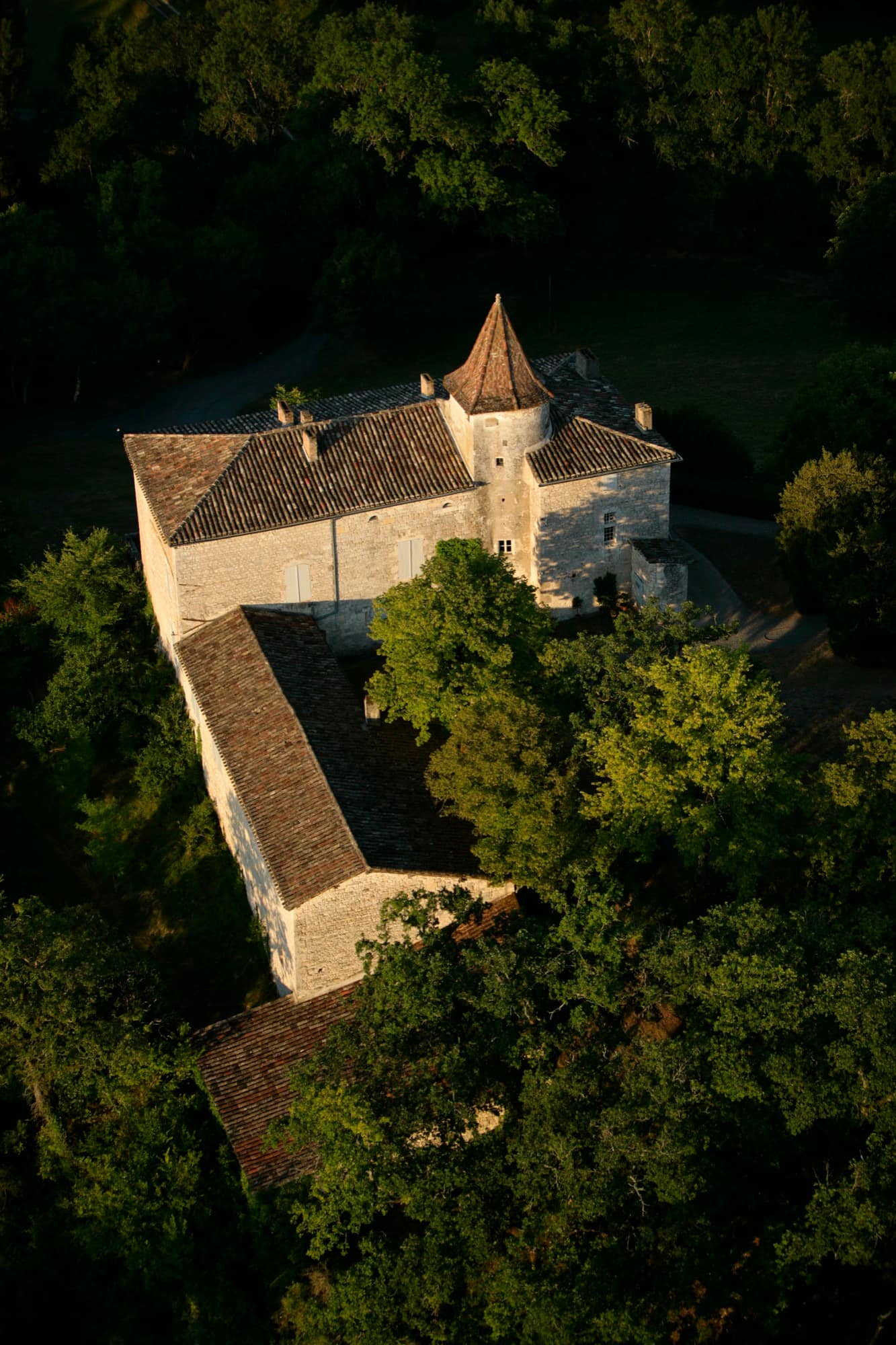
The house is an ordinary Languedoc manor, set in the vineyard away from the road. Nothing of the fortress, nothing of the palace: a gentleman’s house of the rural Tarn, with its kitchen, its study and its great hall.
This is where Maurice de Guérin was born, on 4 August 1810, and where he died on 19 July 1839, aged twenty-eight. His sister Eugénie, born in 1805, lived almost her whole life here and died here in 1848, nine years after him.
Both of them wrote. He wrote prose poems, and is now counted among the form’s first practitioners in France. She kept a journal. And it is she, in the end, who holds the house in literary memory — but we will get there.
The Cahier vert, and George Sand
Maurice began his journal on 10 July 1832, at Le Cayla. He called it the Cahier vert, the green notebook: seventy-six pages, kept on and off, mixing copied-out letters, reading notes, sketches and drafts. It is not a book of confidences, it is a workshop.
He published nothing in his lifetime. He died in July 1839, and his work could have stayed in a drawer at Le Cayla. What happened next is the real turn: on 15 May 1840, readers of the Revue des Deux Mondes were introduced, by George Sand, to an unknown poet who had died ten months earlier. She made his name. Sainte-Beuve would later say that no one had rendered the feeling for nature as he had.
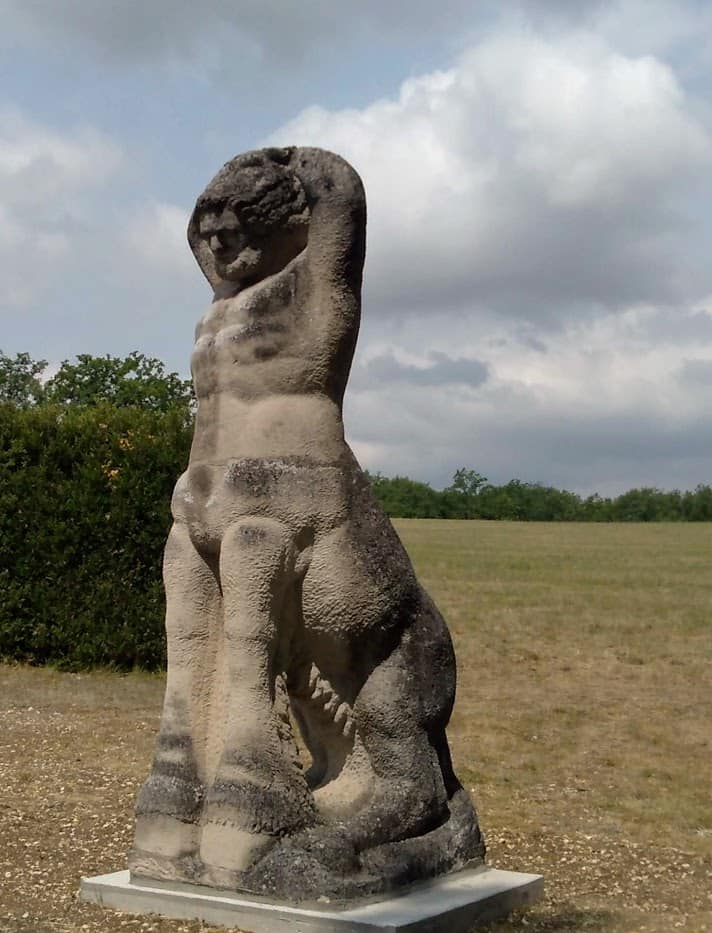
His two best-known texts are Le Centaure and La Bacchante. You will meet the first again out in the park, in stone.
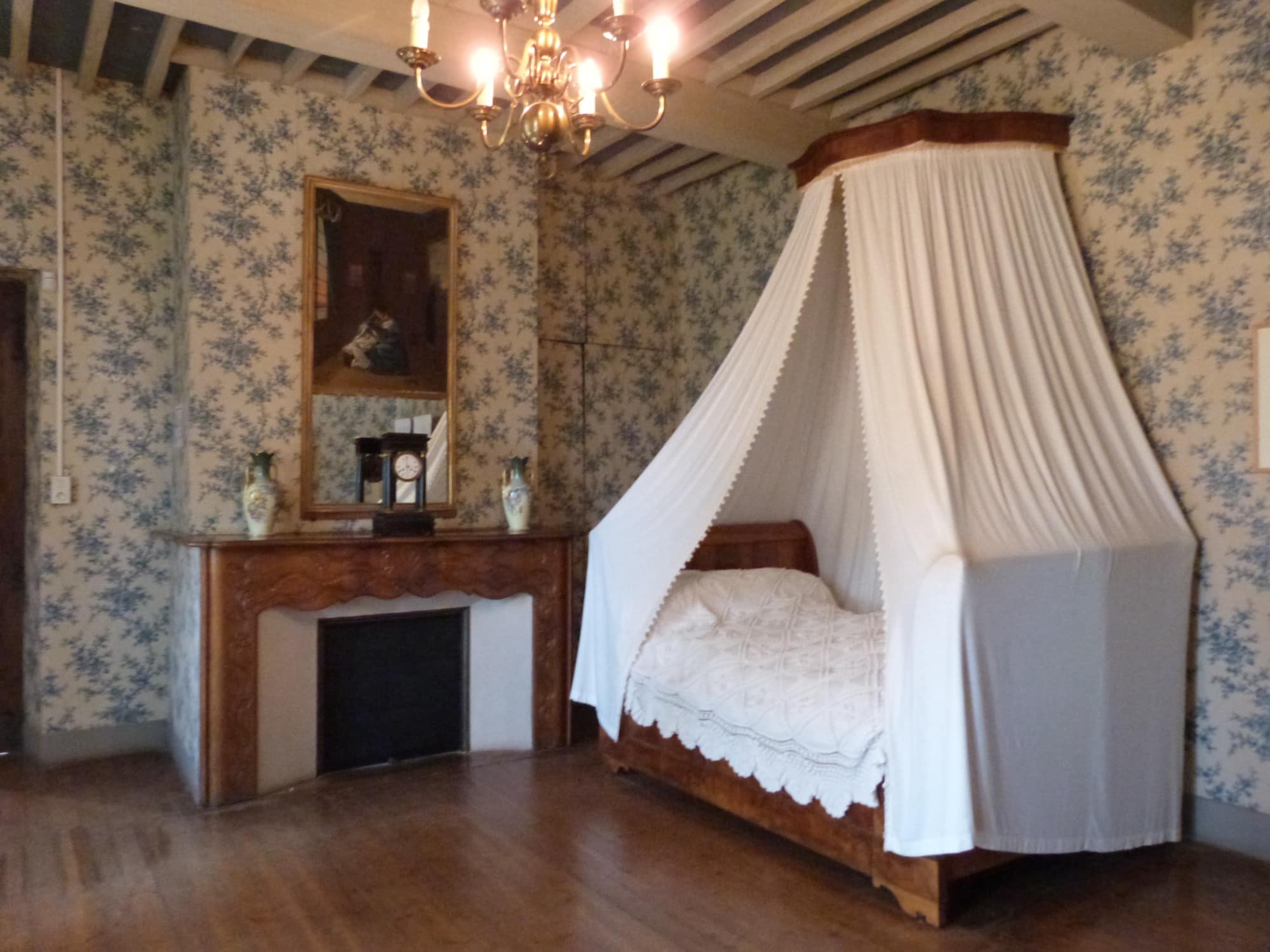
Eugénie’s journal: 517 days, sixteen notebooks
Eugénie opened her journal on 13 September 1834. It ends on 3 October 1841: seven years, 517 days of writing, sixteen notebooks.
She was not writing it for herself. She was writing it for Maurice — her brother, away in Paris, was its intended reader. She tells him about Le Cayla, the seasons, the neighbours, what she has been reading, the life going on in the valley while he is elsewhere.
Then Maurice died, in July 1839. And Eugénie went on writing for two more years.
That is the detail that changes the visit. Moving from one upstairs bedroom to the other, you are no longer looking at two writers from the same family: you are looking at a correspondence that has lost its other end and keeps going anyway for two more years. No panel points this out. You just need the dates.
What there is to see inside
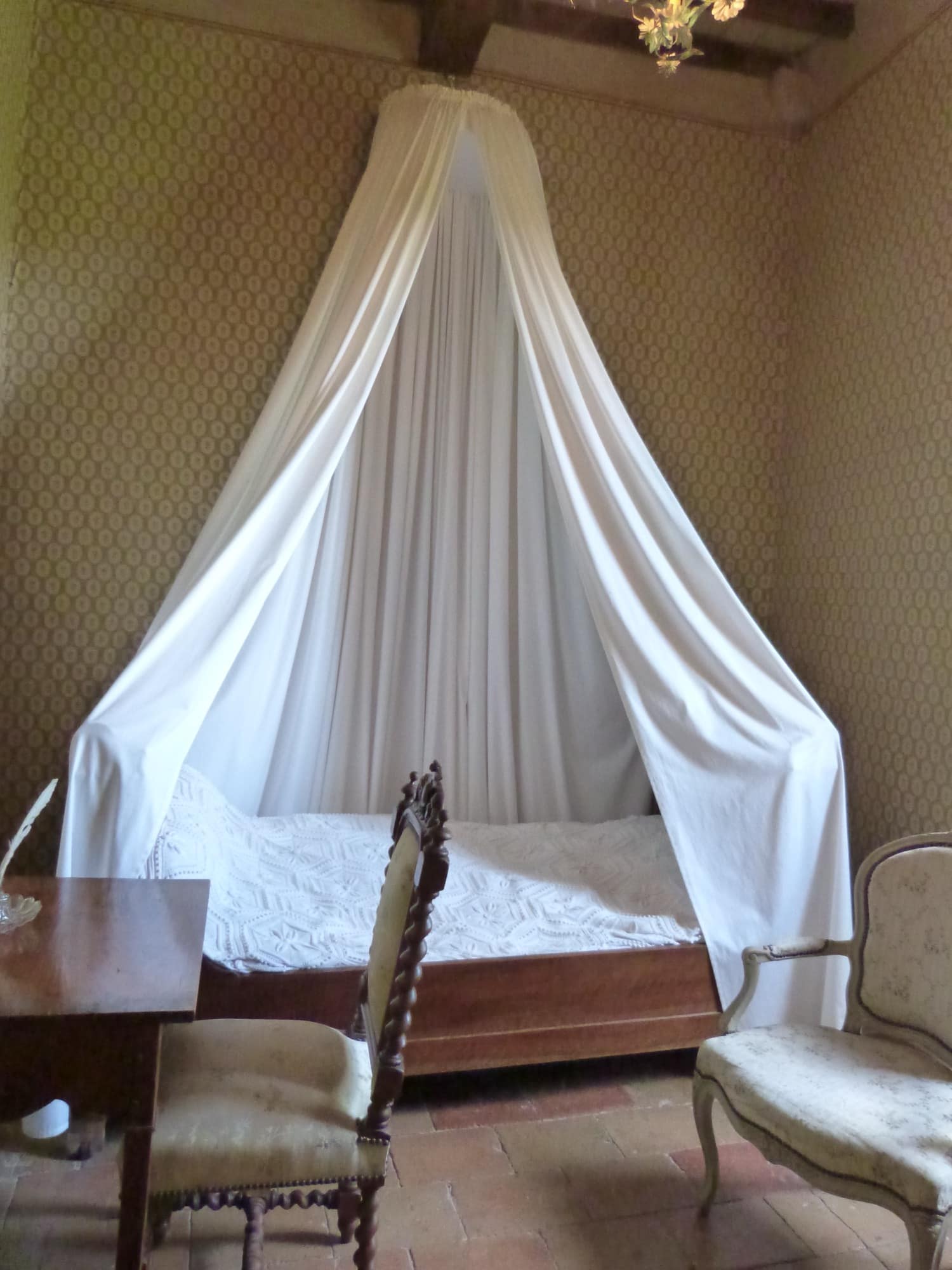
The museum has kept the family’s furniture, objects and archives. The route takes in:
- Maurice’s and Eugénie’s bedrooms, preserved as they were;
- the kitchen and the study of Antoine de Guérin, their father;
- the great hall, with a monumental fireplace carried on caryatids, and its bas-relief;
- a cabinet of curiosities — rare objects and natural specimens, the taste of the Enlightenment, never moved out;
- an installation staging the journal alongside the farming life of the period.
It is small, and that is the point: Le Cayla is not a museum built around a bought collection, it is a house whose contents never left. Two hours go quickly.
Twenty-seven hectares that have not changed
Around the house lie twenty-seven hectares, listed as a Sensitive Natural Area since 2021: woods, meadows, streams. The landscape is roughly the one of the nineteenth century, which is rare enough to have justified the listing, and the biodiversity is correspondingly rich.
A poetry trail crosses it. And somewhere in the park stands André Abbal’s Centaur, a sculpted tribute to Maurice’s text, moved to its present position in the summer of 2019.
Walking the park after seeing the bedrooms is the right order, not the reverse: the whole of Maurice’s work turns on this relation to the outdoors. Seeing it before you know who he was means taking a stroll in a pleasant wood.
November is the right month, and there is not much of it left
There is a seasonal argument here, and it is not decorative. Le Cayla is a house with no period heating, set in a small valley, whose inhabitants wrote about its winters. In November, with the trees bare and the light low, you understand what living here in winter meant far better than you do in August, with the door open and the park in full leaf.
The difficulty is the calendar. The museum closes on 1 December and does not reopen until March. Since it opens neither on Monday nor Tuesday, the last day of the season is Sunday 29 November. From today, that leaves four weekends, this one included.
After that it is 1 March 2027 — which falls on a Monday, so Wednesday 3 March in practice.
Nearby, if you are making the drive
Andillac is a short hop from Cahuzac-sur-Vère, on the road climbing towards Cordes-sur-Ciel — so you can string them together without adding mileage. This is also one of the densest corners for the dovecotes of the Gaillac vineyard, and the loop from Vieux passes three restored ones.
For the vineyard’s other châteaux, including the ones you visit with a glass in hand, read our piece on the castles around Gaillac. And if the sky comes down, Le Cayla is one of the valley’s few serious answers — along with the ones we listed for rainy days.


